Open Formula: How the Luxury Skincare Industry's New Transparency Imperative Is Changing What You Know About What You Buy
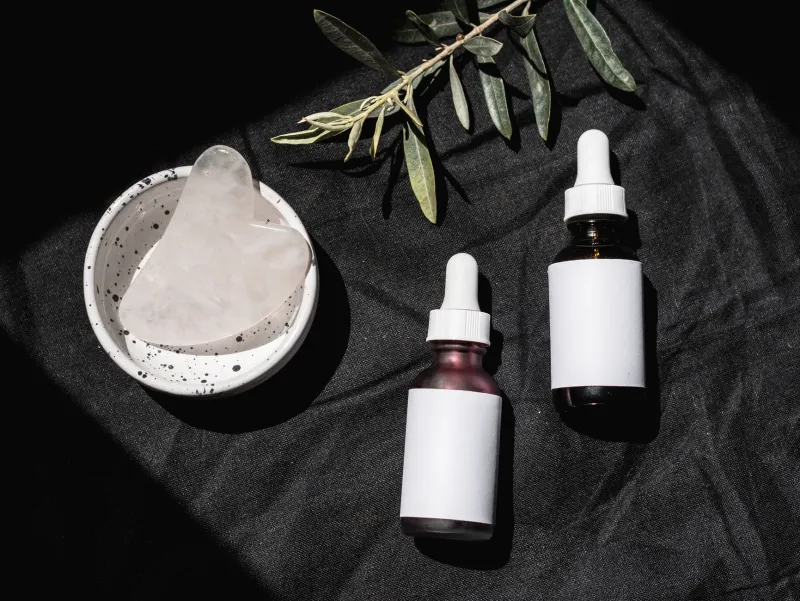
For decades, the luxury skincare industry operated on a carefully maintained paradox: the more exclusive the brand, the less it was expected to explain itself. Proprietary blends, trademarked complexes with evocative but uninformative names, and ingredient lists printed in type small enough to discourage scrutiny were not oversights — they were strategy. Mystery, after all, was considered part of the premium proposition.
That calculus is changing, and changing rapidly.
Across the American luxury beauty market, a growing cohort of prestige brands is voluntarily opening their formulation books in ways that would have been unthinkable five years ago. They are publishing active ingredient concentrations, sharing third-party clinical trial data, naming the specific farms and cooperatives from which botanical extracts are sourced, and submitting their manufacturing processes to independent verification. This is not philanthropy. It is a direct response to a consumer base that has grown too sophisticated to accept opacity as a luxury credential.
The Anatomy of a Formula Disclosure
Understanding what genuine transparency looks like requires knowing what it is not. A brand that lists "retinol" on its packaging without specifying the percentage is providing compliance, not clarity. One that references a "proprietary peptide complex" without identifying the peptides or their functional concentrations is trading on language, not evidence.
Authentic formula transparency, as increasingly practiced by forward-thinking luxury brands, typically encompasses several distinct layers of disclosure. The first is concentration specificity — stating not merely that an active is present but at what percentage it appears in the finished formula. The second is sourcing documentation, which traces botanical and bioactive ingredients to their geographic and agricultural origins. The third, and perhaps most consequential, is clinical substantiation: the publication of actual trial data, including participant demographics, duration, measurement methodology, and statistical significance.
When a brand provides all three, the consumer is no longer asked to trust the marketing department. They are invited to evaluate the science.
Why Now? The Forces Driving Accountability
Several converging pressures have made this moment ripe for transparency. The most immediate is the rise of the informed consumer — specifically, the American beauty enthusiast who has spent years consuming dermatologist-led content on social media, cross-referencing ingredient databases, and building a working vocabulary around actives, delivery systems, and formulation chemistry. This demographic does not find vague claims reassuring. They find them suspicious.
Simultaneously, regulatory conversations at the federal level have placed cosmetic ingredient disclosure under renewed scrutiny. The Modernization of Cosmetics Regulation Act of 2022 introduced the most significant updates to American cosmetic law in decades, signaling that the legislative environment is moving toward greater accountability. Brands that voluntarily exceed current requirements are positioning themselves favorably ahead of what many industry observers consider inevitable tightening.
There is also a competitive dimension. In a saturated prestige market, differentiation through efficacy — rather than packaging or celebrity association — has become a more durable strategy. A brand that can point to published clinical data comparing its vitamin C serum to a placebo, or that can name the specific altitude at which its rosehip oil is cold-pressed, occupies a distinct and defensible position.
The Luxury Paradox: Does Transparency Diminish Mystique?
The most persistent internal resistance to radical transparency within the industry centers on a genuine concern: does revealing the mechanics of a formula erode the sense of artisanal mystery that luxury consumers are, in part, paying for?
The evidence suggests the opposite. Transparency, when executed with the same elegance applied to packaging and brand narrative, does not diminish luxury — it redefines it. A brand that can explain precisely why it sources its bakuchiol from a specific cooperative in India, what the harvest timing does to the concentration of its active constituents, and how that translates to measurable outcomes in a 12-week trial is not demystifying its product. It is demonstrating mastery.
Mystery and excellence are not synonymous. The finest watchmakers in the world publish detailed technical specifications. Acclaimed winemakers discuss vintage conditions with granular precision. The luxury skincare brands that will define the next decade are those that understand their expertise is not diminished by being articulated — it is amplified.
How to Read a Transparent Brand's Claims
For consumers newly navigating this more open landscape, a few interpretive principles are worth establishing.
Seek percentages, not presence. An ingredient listed at a functional concentration is categorically different from one included at a trace level for label appeal. Niacinamide at 10% delivers measurably different outcomes than niacinamide at 0.5%. A brand willing to specify that difference is one worth trusting.
Distinguish clinical from consumer testing. Consumer perception studies — in which participants report whether their skin feels more hydrated — are not the same as controlled clinical trials measuring transepidermal water loss with instrumentation. Both have value, but they answer different questions. Understand which type of evidence a brand is presenting before drawing conclusions.
Interrogate sourcing claims. Geographic origin alone is insufficient. A brand that states its argan oil is sourced from Morocco is providing context. One that names the cooperative, describes the cold-press process, and documents its fair-trade certification is providing accountability. The difference matters both ethically and in terms of the ingredient's likely quality and stability.
Look for third-party verification. Self-reported data, however detailed, carries inherent limitations. Brands that submit their claims to independent dermatological testing, Leaping Bunny certification, COSMOS organic verification, or similar external review are accepting a level of scrutiny that self-certification cannot replicate.
The Emerging Standard
What is emerging from the most progressive corners of the luxury skincare market is something that might be called the open-formula standard — a commitment to disclosure that treats the ingredient list not as proprietary armor but as a direct line of communication with an intelligent consumer.
This standard is not yet universal. Many heritage luxury brands remain protective of formulations they have built over generations, and there are legitimate intellectual property considerations that complicate full disclosure. But the direction of travel is unmistakable. Brands that continue to rely on opacity as a proxy for prestige will find themselves increasingly out of step with the consumers they most want to attract.
The discerning American beauty consumer — one who approaches skincare as seriously as they approach nutrition, investment strategy, or any other domain requiring expertise — is not asking luxury brands to become clinical laboratories. They are asking to be treated as partners in a transaction rather than passive recipients of curated messaging.
In responding to that request with genuine openness, the most thoughtful luxury brands are not sacrificing their identity. They are discovering a more sophisticated version of it — one in which the refinement of nature and the rigor of science are not competing values, but complementary ones.