The Surrender Principle: Why Releasing Expectation May Be the Most Potent Skincare Decision You Make

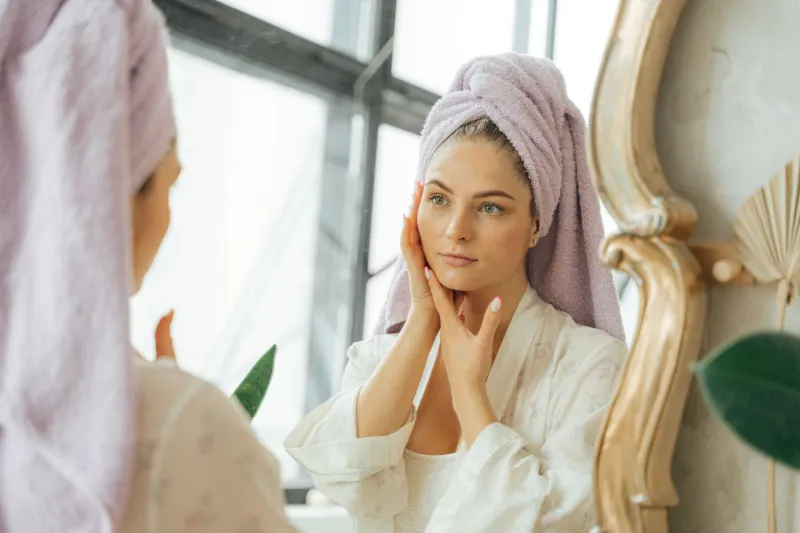
There is a particular kind of dedication that American beauty consumers have long been celebrated for — the disciplined routine, the morning and evening ritual executed without exception, the forensic attention paid to the mirror each dawn in search of incremental improvement. It is the kind of devotion that luxury skincare brands have, in many respects, encouraged. And yet a growing body of evidence drawn from psychodermatology, neuroendocrinology, and behavioral psychology suggests that this very devotion — when it tips from ritual into vigilance — may be actively undermining the results it seeks to produce.
The paradox is both humbling and, ultimately, liberating.
What Cortisol Is Quietly Doing to Your Skin
Stress is rarely discussed in the context of skincare efficacy, yet its biochemical fingerprints are everywhere on the skin. When the body perceives threat — whether that threat is a corporate deadline or the anxious daily examination of fine lines that refuse to diminish — the adrenal glands respond with cortisol. This hormone, indispensable in acute situations, becomes corrosive in its chronic form.
Cortisol disrupts the skin's barrier function by reducing the production of ceramides, the lipid molecules that maintain the tight junctions between skin cells. A compromised barrier is a permeable one — and a permeable barrier is, by definition, less capable of retaining the active ingredients that a sophisticated serum or emulsion has been engineered to deliver. The elegantly concentrated botanical extracts, the precision-dosed peptides, the rare-earth minerals suspended in a bioavailable carrier — they require an intact, receptive canvas. Chronic cortisol elevation denies them that foundation.
Further, elevated cortisol suppresses collagen synthesis and accelerates the degradation of existing collagen fibers through the upregulation of matrix metalloproteinases. The very structural proteins that luxury skincare actives are designed to support are being dismantled, in part, by the psychological pressure of expecting those actives to perform.
The monitoring itself, in other words, may be eroding the results being monitored for.
The Neuroscience of the Watched Pot
Beyond cortisol's direct physiological effects, there is a subtler dynamic at work — one that behavioral scientists have documented across domains as varied as athletic performance, wound healing, and therapeutic outcomes. Excessive outcome-monitoring creates a feedback loop of micro-disappointments. The skin does not transform overnight, nor even over a week. Botanical formulations, by their very nature, operate on timelines that mirror those of the natural world: gradual, cumulative, and resistant to acceleration.
When a consumer examines her complexion each morning with clinical intensity, she is, neurologically speaking, priming herself to perceive stasis. The brain's negativity bias — its evolutionary tendency to weight threats and failures more heavily than gains — ensures that incremental improvements register less vividly than the continued presence of concerns. The result is a perpetual sense of inadequacy, a low-grade dissatisfaction that sustains cortisol elevation and, with it, the physiological conditions least hospitable to skin renewal.
This is not a character flaw. It is a deeply human response to investment. When something matters enough to spend meaningfully upon, the desire for evidence of return is natural. But the science is unambiguous: the watched pot does not merely fail to boil faster — it may actually cool.
The Legitimate Science of the Placebo Effect
It would be a disservice to dismiss the mind-skin relationship as purely cautionary. The same psychobiological pathways that allow stress to impair skin function can, when oriented differently, actively support it. The placebo effect — long condescended to in popular discourse — is, in fact, a genuine physiological phenomenon. Positive expectation triggers the release of endorphins and other neuropeptides that reduce systemic inflammation, support immune regulation, and improve microcirculation in peripheral tissues, including the skin.
Studies examining topical applications have demonstrated that subjects who approached treatment with calm confidence — rather than anxious scrutiny — showed measurably superior outcomes across markers including barrier recovery time, redness reduction, and hydration retention. The formulation had not changed. The application technique had not changed. Only the psychological posture of the person applying it had shifted.
This finding carries profound implications for how luxury skincare ought to be experienced. A product applied in a state of genuine ritual — unhurried, sensory, intentional — is not merely a more pleasurable application. It is, physiologically, a more effective one.
Redefining the Success Metric
A meaningful shift is occurring among the most discerning skincare consumers in the United States — a quiet departure from the before-and-after paradigm that has dominated beauty culture for decades. Rather than measuring the success of a skincare investment against the mirror's verdict each morning, a growing cohort of affluent women and men are reorienting their metrics around the quality of the ritual itself: the texture of a cream against the fingertips, the botanically complex scent of a well-formulated serum, the deliberate two minutes of massage that precede the day.
This is not resignation. It is sophistication. It reflects an understanding — informed, increasingly, by science — that the conditions most conducive to visible skin transformation are those characterized by calm consistency rather than anxious surveillance. The skin responds to being tended with patience in much the same way that a garden does: it requires the right inputs, applied with regularity, within an environment of measured trust.
The brands that understand this are designing accordingly. Ritual architecture — the sequencing of textures, temperatures, and application techniques — is being engineered not only for efficacy but for the deliberate induction of a parasympathetic state. When the nervous system settles, cortisol recedes, barrier function strengthens, and the skin becomes, at last, capable of receiving what has been offered to it.
The Practice of Detached Investment
For consumers accustomed to measuring return on investment with precision, detachment can feel counterintuitive. Yet the concept is not unfamiliar in domains they already navigate with fluency. The most successful long-term investors know that compulsive portfolio-checking amplifies anxiety and invites poor decisions. The most accomplished athletes understand that obsessing over the scoreboard during competition impairs the very performance that produces the desired score.
Skincare, it turns out, is no different. The investment is made in the quality of the formulation, the integrity of the ingredients, the consistency of the ritual. The return accumulates quietly, beneath the surface, on a timeline that demands trust rather than surveillance.
The most powerful thing a discerning consumer can do, having chosen formulations worthy of confidence, is to apply them beautifully — and then, with the particular grace that genuine luxury both enables and rewards, let them work in peace.
Nature, after all, has never responded well to being rushed.