Beyond the Mirror: How Luxury Skincare Is Designing for Every Sense You Possess
For decades, the beauty industry operated on a singular premise: results are visible, and visibility is everything. Before-and-after photography, luminosity filters, and the relentless pursuit of the Instagram-ready glow defined what success looked like—quite literally. Yet something meaningful is shifting among consumers who regard skincare not as a cosmetic transaction but as a considered practice. The most discerning among them are no longer satisfied by surface evidence alone. They want to feel the quality of what they apply, to experience it in real time, and to trust their own senses as instruments of judgment.
This recalibration has not gone unnoticed by the luxury skincare industry. Across prestige formulations, a new design philosophy is emerging—one that treats texture, temperature, weight, and scent not as incidental qualities but as deliberate, load-bearing elements of the product experience. Call it the sensory hierarchy: the understanding that how a product feels, smells, and behaves during application shapes how effective a consumer believes it to be, and ultimately, how loyal they remain to it.
Why Touch Became a Proxy for Trust
The relationship between tactile sensation and perceived quality is well established in consumer psychology. We instinctively associate weight with substance, smoothness with refinement, and warmth with biological activity. Luxury skincare brands have long understood this intuitively—a cream that melts upon contact with skin communicates something that a thin, watery lotion simply cannot, regardless of what either contains.
But the most sophisticated contemporary formulations have moved beyond intuition into deliberate engineering. Rheology—the science of how materials flow and deform—has become a serious discipline within prestige beauty laboratories. Formulators now consider not only how an emulsion behaves in a jar but how it transforms at body temperature, how it spreads under the friction of fingertips, and how quickly it transitions from visible application to invisible absorption. Each of these moments is a sensory data point, and each contributes to what researchers describe as the consumer's holistic efficacy perception.
When a serum glides with a particular weighted fluidity, or when a balm softens almost imperceptibly at the warmth of the palm before spreading, the consumer receives a silent message: this was made with care. That message, once received, is remarkably durable.
The Olfactory Dimension of Legitimacy
Scent occupies a uniquely powerful position in the sensory hierarchy, largely because it bypasses the analytical mind almost entirely. The olfactory system connects directly to the limbic region of the brain—the seat of emotion and memory—which means that fragrance communicates trust, naturalness, and quality through channels that rational scrutiny rarely reaches.
For luxury skincare brands working with genuine botanical ingredients, this presents a distinctive opportunity. The raw, complex, occasionally challenging scent profiles of high-grade plant extracts—cold-pressed rosehip, unrefined sea buckthorn, concentrated bakuchiol—carry an olfactory authenticity that synthetic fragrance cannot replicate. These are not the clean, crowd-pleasing aromas engineered for mass-market appeal; they are the honest signatures of potent materials, and experienced consumers have learned to recognize them as such.
This does not mean that luxury skincare must smell medicinal or austere. Rather, the finest formulations treat scent as a compositional element—layered, intentional, and coherent with the product's ingredient story. When the fragrance of a facial oil tells the same narrative as its ingredient panel, the consumer's trust is reinforced at every level of perception.
Ritual as Architecture
Perhaps the most telling divergence between mass-market beauty and its luxury counterpart lies not in any single sensory quality but in the architecture of the application ritual itself. Mass-market products are, by commercial necessity, designed for speed and convenience—quick absorption, minimal residue, frictionless integration into a rushed morning routine. Luxury skincare, increasingly, is designed to resist that pace.
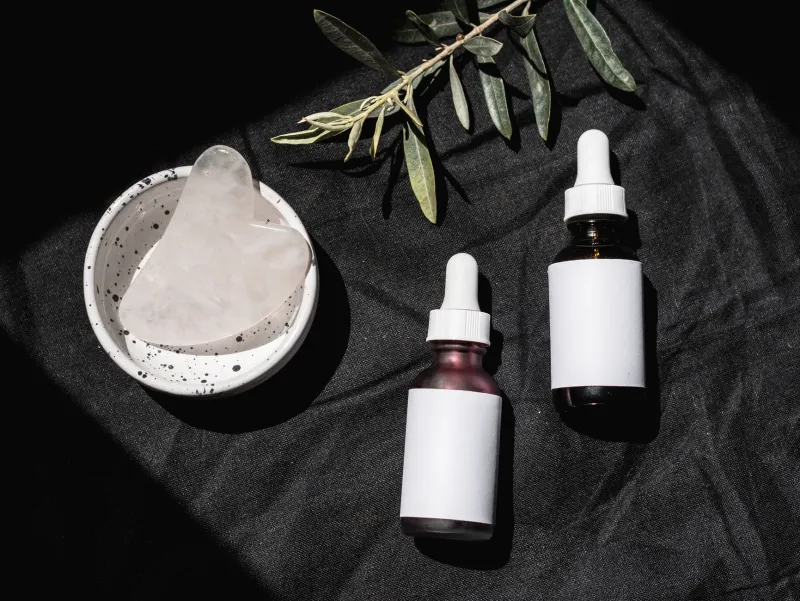
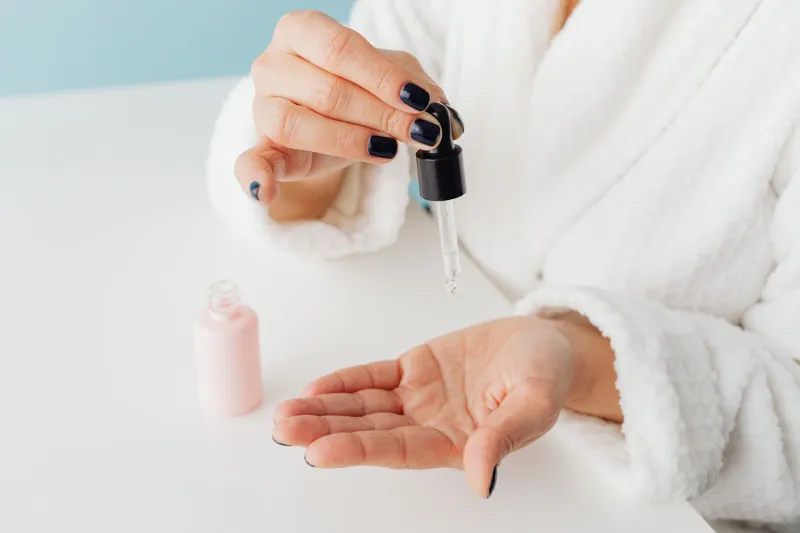
The deliberate weight of a facial massage tool. The measured warmth generated by pressing a botanical oil between the palms before pressing it into skin. The specific sequence of layering—hydrating essence before concentrated serum, serum before protective oil—each step asking for a moment of attention. These are not inefficiencies. They are, in the language of behavioral psychology, commitment devices: small acts that signal to the practitioner that what they are doing matters.
This distinction is culturally significant in the American context, where productivity culture has long rendered slowness suspect. The emergence of a consumer class willing—even eager—to spend ten deliberate minutes on a skincare ritual represents a meaningful value shift. For these individuals, the ritual is not separate from the result; it is constitutive of it. The act of caring for the skin with intention and sensory awareness is itself part of what the skin receives.
Designing for the Discerning Nervous System
Leading luxury formulators are increasingly explicit about this philosophy. The development of a prestige product now routinely includes what might be called sensory mapping: a systematic evaluation of how the product feels at every stage of application, from first contact through final absorption. Does it warm? Does it bloom in texture? Does the scent evolve as it dries down? Does it leave the skin feeling appreciably different from how it began?
This level of consideration demands a fundamentally different development process than that required to produce a product optimized purely for clinical outcomes. It requires collaboration between chemists, sensory scientists, and—in the most rigorous houses—neuroscientists who understand how perceptual experience shapes physiological response. There is, after all, meaningful evidence that the relaxation induced by a pleasurable application ritual has measurable effects on skin: reduced cortisol, improved barrier function, enhanced circulation. The sensory experience is not merely psychological window dressing. It is, in a very real sense, part of the mechanism.
What This Means for the Informed Consumer
For those who approach their skincare as an investment rather than a commodity, the sensory hierarchy offers a practical framework for evaluation. A product that has been thoughtfully designed for multi-sensory experience is almost invariably a product whose development has been taken seriously across every dimension—ingredient sourcing, formulation integrity, and the consumer's complete moment of use.
Conversely, a product that feels inert, smells generic, and disappears without ceremony may still deliver clinical results—but it reveals something about the priorities of its makers. Luxury, in its truest expression, is not indifferent to experience. It is constituted by it.
The mirror will always matter. But the most enduring beauty rituals are built on what happens before you look.